
The Ultimate Stoic Cure for Overthinking: Seneca on Imagined Suffering
A deep dive into Seneca's quote "We suffer more often in imagination than in reality." Learn how to apply ancient Stoicism to modern anxiety.

Have you ever lost sleep running through the worst-case scenarios of a presentation, a difficult conversation or a financial decision? You mentally rehearse the disaster so many times that your body reacts as if it’s actually happening. Your heart races, your palms sweat and your day is ruined—all over an event that hasn’t even occurred. This tendency to dwell on imagined catastrophes can be countered by realizing that we have power over our minds, not the outside events that we fear.
Seneca, one of the most prominent Stoic philosophers of Ancient Rome, diagnosed this exact human flaw over two thousand years ago.
The Quote
“There are more things, Lucilius, likely to frighten us than there are to crush us; we suffer more often in imagination than in reality.”
The Context: When and Why Did Seneca Say This?
Seneca wrote this in his Letters from a Stoic to his friend Lucilius, who was dealing with intense political and personal anxiety. Unlike modern self-help gurus, Seneca wasn’t writing from a place of sheltered theory. He was an advisor to the volatile Emperor Nero and eventually faced exile and execution. He knew what real suffering looked like.
Yet, despite facing genuine existential threats, Seneca observed that humans have a uniquely destructive habit: we borrow misery from the future. He noticed that the anticipation of pain was almost always more exhausting and terrifying than the pain itself.
What This Quote Actually Means for You
At first glance, it might sound like a simple instruction to “stop worrying,” but it is actually a highly tactical observation about how your brain works. When Seneca says “we suffer more often in imagination than in reality,” he is exposing the fact that your anxiety is a terrible fortune teller.
Our brains evolved to protect us by simulating threats. In modern life, those threats are rarely saber-toothed tigers; they are missed deadlines or awkward social interactions. But your brain still simulates them with the same life-or-death intensity. You live through the “tragedy” a hundred times in your head, while in reality, the event either never happens or happens and is highly manageable. This perspective is crucial for mental resilience, highlighting that the boundary between our feelings and our environment is where we can find peace, a concept also explored in Viktor Frankl’s logotherapy and choice framework.
Here is how you can apply this to cure your overthinking:
- Anchor to the Present Moment: When your brain starts spiraling into “what ifs,” ask yourself: “What is actively threatening me in this exact second?” Usually, the answer is nothing.
- Differentiate Between Likely and Possible: It is possible that your boss will fire you over a minor typo, but is it likely? Overthinkers treat remote possibilities as inevitable realities. Force yourself to look at the actual probabilities.
- Save Your Energy for the Real Fight: Recognize that worrying does not prepare you for disaster; it just drains the energy you will need if a disaster actually strikes.
Recommended Reading
If you want to stop letting your imagination torture you, I highly recommend diving deeper into the pragmatic world of Stoicism.

Letters from a Stoic
Read Seneca's original letters to Lucilius. It is shocking how perfectly a 2,000-year-old Roman statesman understands modern anxiety.
* As an Amazon Associate I earn from qualifying purchases at no extra cost to you.
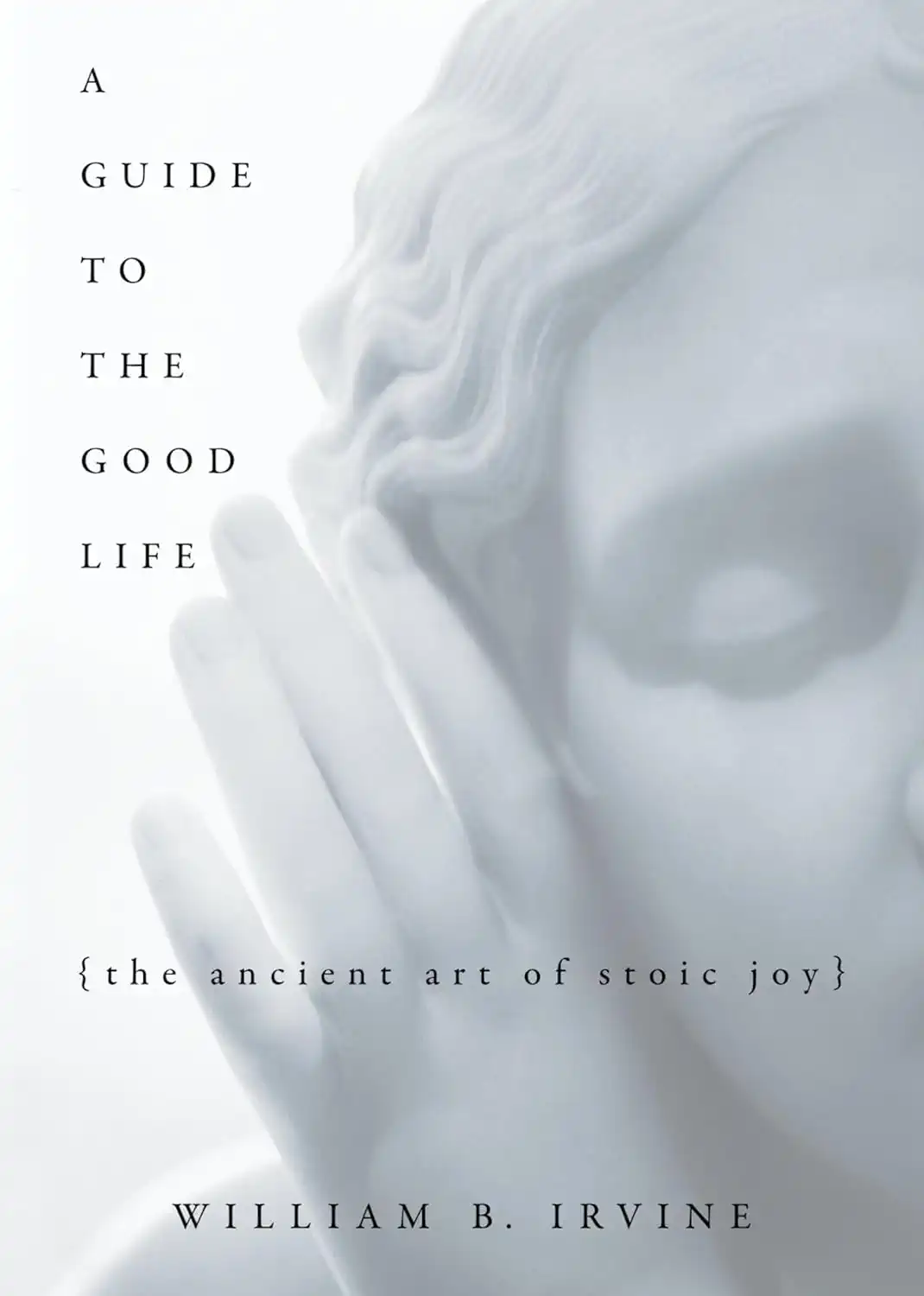
A Guide to the Good Life: The Ancient Art of Stoic Joy
William B. Irvine's fantastic modern translation of Stoic principles, specifically focusing on how to reduce negative emotions in the 21st century.
* As an Amazon Associate I earn from qualifying purchases at no extra cost to you.

Limited time offer: Save over 80% on Audible Standard, plus a bonus $20 credit for Audible.com.
*Bonus $20 credit for Audible.com credit notification will be received via email. Auto-renews at $0.99/mo for 3 months, then $8.99/mo. thereafter. Cancel anytime. Ends July 5, 2026.
Did this quote change your perspective on your anxiety? Share it with an overthinker in your life who needs to hear this!